하늘 아래 작은 지붕, 우산: 권력의 상징에서 일상의 동반자까지, 4000년의 문화사

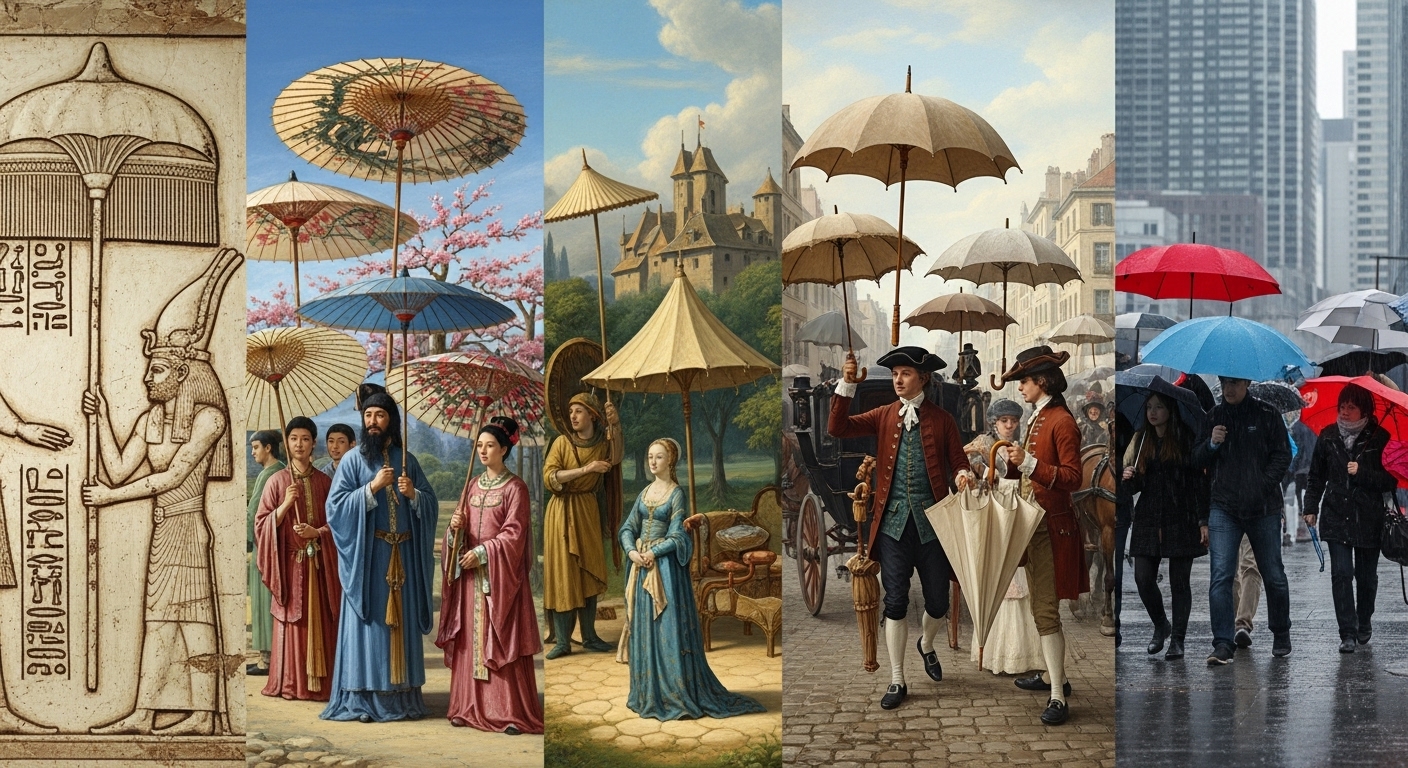
안녕하세요~
오늘은 우리에게 늘 가까이 있는 우산의 역사와 그 이면에 숨은 이야기를 함께 공유하려고 합니다.

서론: 비를 가리는 것 이상의 의미
우리는 비 오는 날이면 무심코 우산을 펼쳐 듭니다. 이 간단한 행위 뒤에는 인류 문명의 4,000년 역사가 담겨 있다는 사실을 아는 이는 많지 않습니다. 오늘날 우리에게 우산은 비를 막아주는 일상적인 도구에 불과하지만, 그 기원을 거슬러 올라가면 신성한 왕권을 상징하는 의례용품이었고, 때로는 사회적 논쟁의 중심에 선 문제적 물건이었으며, 현대에 이르러서는 정치적 저항의 상징이자 최첨단 기술이 집약된 액세서리로 진화해왔습니다.1
이 '휴대용 지붕'은 어떻게 신성한 왕의 권위를 드러내는 신물(神物)에서 일회용 소모품으로, 평화적 시위의 상징으로, 그리고 데이터를 주고받는 스마트 기기로 변모해왔을까요? 이 질문에 답하기 위해, 우리는 우산이라는 작은 사물을 렌즈 삼아 인류 역사의 거대한 흐름을 탐험하고자 합니다. 우산의 이야기는 곧 인류 문명사의 축소판과 같습니다. 고대 제국의 권력 집중, 동양에서 시작된 실용적 혁신, 산업화 시대 유럽의 계급과 성별 갈등, 그리고 현대 사회의 기술과 일상의 융합이라는 거대한 사회적 변동이 이 작은 물건의 역사 속에 고스란히 투영되어 있기 때문입니다. 지금부터 하늘 아래 가장 작은 지붕, 우산이 걸어온 4,000년의 여정을 따라가 보겠습니다.
제1장: 신들의 그늘 - 양산의 고대적 기원
우산의 역사는 비가 아닌 태양 아래에서 시작되었습니다. 최초의 우산은 비를 막기 위한 '우산(雨傘)'이 아니라, 강렬한 햇볕을 가리기 위한 '양산(陽傘, Parasol)'이었습니다. 그 여정은 고대 메소포타미아와 이집트의 건조하고 뜨거운 땅에서 출발하며, 그곳에서 양산은 단순한 차양 도구가 아닌 권력과 신성, 그리고 사회 질서를 드러내는 가장 강력한 상징 중 하나로 자리 잡았습니다.
최초의 우산: 메소포타미아의 권력 상징
역사상 가장 오래된 우산의 흔적은 기원전 24세기경 메소포타미아 지역의 아카드 제국에서 발견됩니다. 아카드 제국의 위대한 통치자 사르곤 대왕(재위 기원전 2334–2279년)의 승전비에는 전쟁터로 향하는 왕의 머리 위로 시종이 거대한 양산을 받쳐 든 모습이 선명하게 새겨져 있습니다.3 이는 양산의 초기 기능이 전장에서조차 왕의 존엄과 권위를 시각적으로 드러내는 표식이었음을 명확히 보여줍니다.5
이집트의 신성한 닫집
약 4,000년 전 고대 이집트에서 양산의 상징성은 더욱 신성한 차원으로 발전했습니다.6 파라오와 왕족, 고위 귀족과 성직자만이 양산을 사용할 수 있었으며 8, 이는 단순한 특권을 넘어 신과의 연결을 의미했습니다. 이집트인들은 양산을 하늘의 여신 '누트(Nut)'의 상징으로 여겼고, 양산 아래에 있는 것은 곧 여신의 신성한 보호 아래 있음을 의미했습니다.9 따라서 파라오의 행차에 등장하는 양산은 그가 하늘로부터 통치권을 위임받은 신성한 존재임을 공표하는 장치였습니다. 당시의 양산은 야자수 잎이나 화려한 깃털을 긴 손잡이에 묶어 만든 형태로, 실용성보다는 의례적 성격이 강했습니다.6
이처럼 건조한 기후의 고대 문명에서 '그늘'은 매우 희소하고 귀중한 자원이었습니다. 양산은 단순한 액세서리가 아니라, 통치자를 위해 인위적으로 '신성한 공간'을 창출하는 '이동식 건축물'과 같았습니다. 이는 파라오의 신성한 신체를 외부의 거친 환경과 평범한 대중으로부터 물리적, 상징적으로 분리함으로써, 눈에 보이는 형태로 사회 질서를 강화하는 역할을 수행했습니다.
그리스와 로마: 인식의 변화
고대 그리스와 로마에서도 양산은 사용되었지만, 그 의미는 다소 변화했습니다. 점차 여성들의 전유물로 여겨지기 시작했으며, 때로는 남성이 양산을 사용하는 것을 나약함의 상징으로 여기는 시각이 나타났습니다.5 이러한 인식은 수백 년 후 유럽에서 우산이 처음 등장했을 때 겪게 될 사회적 저항의 전조가 되었습니다.10
제2장: 동양의 혁신 - 중국, 비를 막는 우산을 발명하다
고대 세계에서 정적이고 의례적인 상징물이었던 양산은 중국에서 혁명적인 변화를 맞이합니다. 바로 햇볕뿐만 아니라 비를 막을 수 있는 실용적인 도구, 즉 진정한 의미의 '우산'으로 재탄생한 것입니다. 접고 펼 수 있는 구조와 방수 기술의 발명은 우산의 역사에서 가장 중요한 패러다임 전환이었으며, 이는 우산을 권력의 상징에서 민중의 생활필수품으로, 나아가 풍부한 문화적 의미를 담는 캔버스로 바꾸어 놓았습니다.
전설 속의 발명
중국 문화는 우산의 발명을 여러 전설적인 인물에게 돌리며 그 중요성을 강조합니다. 가장 널리 알려진 이야기는 중국 고대의 전설적인 장인인 노반(魯班)의 아내에 관한 것입니다.13 밖에서 일하는 남편이 비를 맞는 것을 안타깝게 여긴 그녀가 대나무와 짐승의 가죽 혹은 비단을 이용해 '휴대용 정자'를 만들었다는 이야기입니다.15 또 다른 전설은 황제(黃帝)가 만개한 꽃의 모습에서 영감을 얻어 '화개(華蓋)'라는 덮개를 만들었다는 기록에서 그 기원을 찾습니다.16 이러한 신화들은 우산이 단순한 발명품을 넘어, 배려와 지혜의 산물로서 문화적으로 얼마나 중요하게 인식되었는지를 보여줍니다.
기술적 돌파구: 접이식 구조와 방수 처리
중국의 가장 큰 기여는 '실용성'을 부여한 두 가지 핵심 기술에 있습니다. 첫째는 접고 펼 수 있는 구조의 개발입니다. 이미 서기 21년의 기록에 접이식 산(傘)에 대한 묘사가 등장할 정도로 이른 시기에 휴대성을 확보했습니다.3 둘째는 바로 방수 기술입니다. 장인들은 뽕나무 껍질로 만든 질긴 종이(한지)에 동유(桐油, Tung oil)나 왁스를 여러 번 먹여 건조시키는 방식으로 가벼우면서도 효과적인 방수 기능을 구현했습니다.19 이렇게 탄생한 '유지우산(油紙傘)'은 동아시아 우산 문화의 원형이 되었습니다.
권력의 상징에서 민중의 문화로
초기 중국에서도 우산은 황제의 권위를 상징하는 중요한 의례용품이었습니다. 황제는 노란색이나 붉은색 우산을 사용해 자신의 지위를 나타냈으며, 신분에 따라 우산의 색과 크기가 엄격히 구분되었습니다.15 하지만 유지우산의 뛰어난 실용성은 점차 그 사용을 민간으로 확산시켰고, 이 과정에서 우산은 다채로운 민속적 상징을 흡수하게 됩니다.
결혼과 다산의 상징: 전통 혼례에서 붉은 유지우산은 신부를 악귀로부터 보호하는 중요한 역할을 합니다.22 특히 '유지(油紙, yóuzhǐ)'의 중국어 발음이 '아들을 두다(有子, yǒuzǐ)'와 비슷하여 다산을 기원하는 강력한 상징이 되었습니다.13 또한 우산의 둥근 형태는 원만하고 행복한 결혼 생활을 의미합니다.13
장수와 행운: 보라색 우산은 노인의 장수를, 흰색 우산은 장례식을 상징하는 등 색깔에 따라 다른 의미를 지녔습니다.13 우산의 전통 한자인 '傘'에 '사람 인(人)' 자가 여러 개 포함되어 있어, 자손의 번창을 기원하는 의미로도 해석되었습니다.13
이처럼 중국에서 일어난 접이식 구조와 방수 기술의 혁신은 우산의 본질을 바꾸었습니다. 누군가가 '받쳐주어야' 했던 수동적이고 의례적인 물건에서, 개인이 직접 '소지하고 사용하는' 능동적인 개인 기술로 전환된 것입니다. 이러한 변화는 우산을 궁궐 담장 밖으로 이끌어냈고, 희귀한 권력의 상징을 풍부한 문화적 의미를 담아내는 보편적인 생활 도구로 탈바꿈시켰습니다. 이 혁신적인 발명품은 당나라(618-907) 시기에 한국과 일본 등 주변국으로 전파되어 동아시아 우산 문화의 기틀을 마련했습니다.21
제3장: 신사의 짐 - 유럽에 상륙한 우산의 수난사
동양에서 실용적인 생활필수품으로 자리 잡은 우산은 서양, 특히 18세기 영국에서 혹독한 시련을 겪으며 논란의 중심에 섭니다. 중국에서 건너온 이 낯선 물건은 단순한 비 가리개가 아니라, 당시 영국 사회가 품고 있던 성 역할, 계급 구조, 그리고 국가 정체성에 대한 깊은 불안감을 자극하는 도화선이 되었습니다. 용감한 선구자 조나스 한웨이(Jonas Hanway)가 대중의 조롱을 무릅쓰고 우산을 대중화시킨 과정은, 낡은 관습과 새로운 합리주의가 충돌했던 근대성의 전초전과도 같았습니다.
우산 이전의 유럽
18세기 이전, 비 오는 유럽의 거리에서 사람들은 비를 맞는 것이 당연했습니다. 비를 피하기 위해 처마 밑으로 뛰어들거나, 두꺼운 후드가 달린 외투를 입는 것이 전부였습니다.3 심지어 일부 사람들은 하늘에서 내리는 비를 인위적으로 막는 행위가 신의 뜻을 거스르는 불경한 행동이라고 여기기도 했습니다.26 개인용 비 가리개라는 개념 자체가 존재하지 않았던 것입니다.
선구자, 조나스 한웨이
이러한 사회 분위기에 변화를 가져온 인물은 영국의 여행가이자 자선사업가인 조나스 한웨이(1712-1786)였습니다. 그는 1750년경, 아시아 여행에서 본 우산의 실용성에 깊은 인상을 받고 런던으로 돌아와 비 오는 거리에서 우산을 쓰기 시작했습니다.5 그는 런던에서 최초로 우산을 일상적으로 사용한 남성으로 기록되며, 이후 30년 동안이나 대중의 끊임없는 조롱과 멸시를 견뎌내야 했습니다.30
격렬한 사회적 저항의 원인
한웨이가 마주한 저항은 단순히 낯선 물건에 대한 호기심을 넘어선 것이었습니다. 그 배경에는 당시 영국 사회의 복잡한 심리가 얽혀 있었습니다.
성 역할의 고정관념: 당시 유럽에서 양산은 이미 여성의 액세서리로 인식되고 있었습니다. 따라서 남성이 우산을 쓰는 것은 "여성스럽다"거나 "멋 부리는 프랑스 놈 같다"는 비난의 대상이 되었습니다.29
계급과 경제적 갈등: 당시 부유층은 비를 맞으며 걸을 필요 없이 마차를 타고 다녔습니다. 비를 맞으며 걷는 것은 하층민의 상징이었습니다. 이런 상황에서 우산을 쓴다는 것은, 걸어 다닐 형편이면서도 고상한 척하는 가식적인 행위로 비쳤습니다. 특히 우산의 보급은 마차 영업에 직접적인 위협이 되었기 때문에, 마부들은 한웨이에게 고의로 흙탕물을 튀기거나 욕설을 퍼붓는 등 격렬하게 저항했습니다.34
조악한 품질: 초기의 유럽 우산은 고래뼈나 무거운 나무로 살을 만들고 기름 먹인 캔버스 천을 씌워 매우 무겁고 거추장스러웠으며, 방수 기능도 완벽하지 않았습니다.26
전환점과 대중화
끈질긴 조롱에도 불구하고, 비가 잦은 런던의 날씨 속에서 우산의 실용성은 점차 인정받기 시작했습니다. 한웨이가 세상을 떠날 무렵, 남성들이 우산을 쓰는 풍경은 더 이상 기이한 일이 아니게 되었습니다. 우산은 한웨이의 상징이 되어 한때 '핸웨이(Hanway)'라고 불리기도 했습니다.28 결정적으로 1852년, 사무엘 폭스(Samuel Fox)가 가볍고 튼튼한 강철 살을 발명하면서 우산은 대량생산이 가능해졌고, 가격이 저렴해지면서 모든 계층의 필수품으로 자리 잡게 되었습니다.28
18세기 영국에서 벌어진 '우산 논쟁'은 단순한 해프닝이 아니었습니다. 이는 "비가 오면 막는다"는 합리적이고 개인주의적인 근대적 사고방식과, "남자는 비를 맞아야 한다"는 전통적이고 집단적인 관습 사이의 충돌이었습니다. 결국 우산의 승리는 실용주의의 승리였으며, 새롭게 부상하던 도시 중산층의 정체성을 상징하는 사건이었습니다. 한때 여성성의 상징으로 여겨졌던 우산은 이제 비 오는 도시를 활보하는 '품위 있는 신사'의 상징으로 거듭나게 된 것입니다.
제4장: 펼쳐진 미학 - 한국과 일본의 우산 예술
중국에서 발명된 실용적인 종이 우산은 한국과 일본으로 전해져 각기 다른 문화적 토양 위에서 독자적인 미학을 꽃피웠습니다. 한국에서는 소박하고 견실한 생활 공예품인 '지우산(紙雨傘)'으로 발전했으나 근대화의 물결 속에서 명맥이 끊길 뻔한 위기를 겪었고, 일본에서는 섬세하고 상징적인 예술품인 '와가사(和傘)'로 분화하여 오늘날까지 전통문화의 중요한 일부로 이어지고 있습니다. 두 나라에서 종이 우산이 걸어온 상이한 길은, 동일한 문화적 유산이 각 사회의 근대화 과정과 어떻게 다르게 상호작용했는지를 보여주는 흥미로운 사례입니다.
제1부: 한국의 질박한 공예, 지우산(紙雨傘)
왕의 일산(日傘)에서 서민의 지우산으로: 한국의 우산 역사 역시 다른 고대 문명과 마찬가지로 권력의 상징에서 시작되었습니다. 고구려 고분벽화에는 시녀가 귀인의 뒤에서 햇볕을 가려주는 거대한 '일산(日傘)'이 등장하며, 이는 왕실의 권위를 나타내는 의장물이었습니다.36 이후 중국으로부터 실용적인 유지우산이 전래되면서 '지우산(紙雨傘)'이라는 이름으로 서민들의 생활 속으로 파고들었습니다.26 우산을 뜻하는 순우리말 '슈룹'은 15세기 문헌인 『훈민정음 해례본』에도 등장할 만큼 오랜 역사를 지니고 있습니다.4
자연의 재료와 장인의 손길: 한국 지우산의 특징은 자연에서 얻은 소박한 재료에 있습니다. 뼈대는 대나무로 만들고, 덮개는 닥나무 섬유로 만든 양질의 한지(韓紙)를 사용합니다. 그리고 방수를 위해 들기름을 여러 번 먹여 말리는 과정을 거칩니다.11 이 모든 과정은 장인의 손을 통해 이루어지는 정교한 수공예 작업입니다.
쇠락과 부활의 역사: 지우산은 20세기 중반까지 한국인의 보편적인 생활필수품이었습니다.41 그러나 1960년대 이후 값싼 비닐우산과 나일론 천우산이 대량으로 보급되면서 수공예품인 지우산은 급격히 설 자리를 잃었습니다.26 1980년대에 이르러서는 그 생산이 거의 중단되어 전통의 맥이 끊길 위기에 처했습니다. 오늘날 지우산 제작 기술은 국가무형문화재 '우산장' 윤규상 장인과 같은 소수의 장인들에 의해 힘겹게 복원되고 전승되고 있습니다.41
제2부: 일본의 우아한 형태, 와가사(和傘)
다채롭게 분화한 우산의 세계: 일본에 전래된 우산은 '와가사(和傘)'라는 이름 아래 용도와 형태에 따라 정교하게 분화하며 독자적인 문화를 형성했습니다.44
o 반가사(番傘): 굵은 대나무로 만들어 튼튼하고 소박한 형태의 우산입니다. 주로 남성들이 사용하거나, 상점에서 손님에게 빌려주기 위해 가게 번호를 새겨두었던 것에서 그 이름이 유래했습니다.
o 자노메가사(蛇の目傘): '뱀의 눈'이라는 뜻으로, 우산을 펼쳤을 때 나타나는 동심원 무늬가 특징입니다. 가볍고 섬세하며 화려하여 주로 여성이 사용했고, 가부키와 같은 전통 예술의 소품으로도 널리 쓰였습니다. 이 뱀눈 무늬는 악귀를 쫓는 주술적 의미를 담고 있다고 여겨집니다.46
o 히가사(日傘): 방수 처리 없이 햇볕을 가리는 용도로만 제작된 양산입니다.
낭만과 친밀감의 상징, 아이아이가사(相合傘): 일본 문화에는 '아이아이가사'라는 독특한 관습이 있습니다. 비 오는 날 한 우산 아래 두 사람이 함께 들어가는 행위를 뜻하는 이 말은 단순한 배려를 넘어 낭만과 친밀감의 상징으로 통합니다.49 남녀 간의 교제가 자유롭지 못했던 에도 시대, 함께 우산을 쓰는 것은 연인에게 허락된 몇 안 되는 신체적 근접의 기회였습니다. 이러한 문화적 배경으로 인해 아이아이가사는 오늘날에도 일본의 영화, 만화, 드라마 등에서 사랑이 시작되는 순간을 암시하는 클리셰로 자주 사용됩니다.
한국과 일본은 모두 중국으로부터 종이 우산을 받아들였지만, 그 운명은 각기 다른 길을 걸었습니다. 일본의 와가사는 가부키, 다도, 게이샤 문화 등 특정한 문화적 영역 안에서 예술성과 상징성을 강화하며 살아남은 반면, 한국의 지우산은 주로 실용적 생활 공예품으로 존재하다가 급격한 산업화의 파도에 휩쓸려 거의 소멸 직전에 이르렀습니다. 두 나라 종이 우산의 상이한 역사는 전통 공예가 산업화라는 거대한 변화 속에서 어떻게 생존하고, 혹은 소멸하는지에 대한 깊은 통찰을 제공합니다.
제5장: 세계의 문화 지형도 - 우산 비교 문화 분석
앞서 살펴본 바와 같이, 우산이라는 하나의 사물은 각기 다른 문화권의 기후, 사회 구조, 그리고 가치관에 따라 전혀 다른 모습으로 발전하고 상징적인 의미를 부여받았습니다. 고대 이집트의 신성한 양산에서부터 중국의 실용적인 유지우산, 영국 신사의 상징이 된 검은 우산에 이르기까지, 우산의 여정은 인류 문화의 다양성을 압축적으로 보여주는 흥미로운 사례입니다. 아래의 비교 분석표는 이러한 문화적 변용을 한눈에 파악할 수 있도록 주요 특징을 정리한 것입니다.
이 표는 우산이 단순한 기능적 도구를 넘어 각 사회의 정체성을 반영하는 문화적 '카멜레온'임을 명확히 보여줍니다. 예를 들어, '주요 용도' 항목을 따라가 보면 이집트의 '햇볕/의례'에서 중국의 '햇볕/비/의례'로, 그리고 영국의 '비'로 기능이 점차 실용적으로 변해가는 과정을 볼 수 있습니다. '사회적 연관성' 항목에서는 '왕족 전유물'에서 계층에 따라 '차등화된 사용'으로, 그리고 유럽에서는 '여성성'과 '남성성'을 둘러싼 사회적 논쟁의 대상으로 변화하는 흥미로운 궤적을 확인할 수 있습니다. 이처럼 우산은 각 문화가 자신들의 세계를 어떻게 인식하고 구성하는지를 비추는 작은 거울과도 같습니다.
| 특징 | 고대 메소포타미아/이집트 | 고대/제정기 중국 | 조선시대 한국 | 에도시대 일본 | 18세기 영국 |
| 주요 용도 | 햇볕 차단, 의례용 | 햇볕 및 비 차단, 의례, 신분 표시 | 햇볕 및 비 차단, 신분 표시(초기), 일상용(후기) | 햇볕 및 비 차단, 예술/공연, 의례 | 비 차단 |
| 핵심 재료 | 야자수 잎, 깃털, 나무 | 대나무, 비단, 종이, 동유 | 대나무, 한지, 들기름 | 대나무, 화지, 식물성 기름 | 고래뼈, 나무, 기름 먹인 비단/캔버스 |
| 사회적 연관성 | 왕족 및 신성 계급의 전유물 | 황제, 관료, 서민으로 차등화 (사용 제한 존재) | 왕족(일산), 이후 모든 계층(지우산) | 종류에 따라 계층 분화 (반가사: 서민, 자노메가사: 여성/예술가) | 초기에는 여성용 액세서리, 남성에게는 여성성의 상징으로 간주 |
| 핵심 상징 의미 | 신성한 권력, 하늘의 권위, 신성 공간 | 권력, 다산, 장수, 행운, 화합 | 권위(초기), 실용적 공예(후기) | 액막이, 미학적 아름다움, 낭만(아이아이가사) | 사회적 논쟁, 계급, 이후에는 품위 있는 남성성의 상징 |
| 주요 용어 | 파라솔(Parasol) | 유지우산(油紙傘), 화개(華蓋) | 일산(日傘), 지우산(紙雨傘), 슈룹 | 와가사(和傘), 반가사(番傘), 자노메가사(蛇の目傘) | 엄브렐러(Umbrella), 파라솔(Parasol), 핸웨이(Hanway) |
제6장: 현대의 닫집 - 정치, 첩보, 그리고 예술 속의 우산
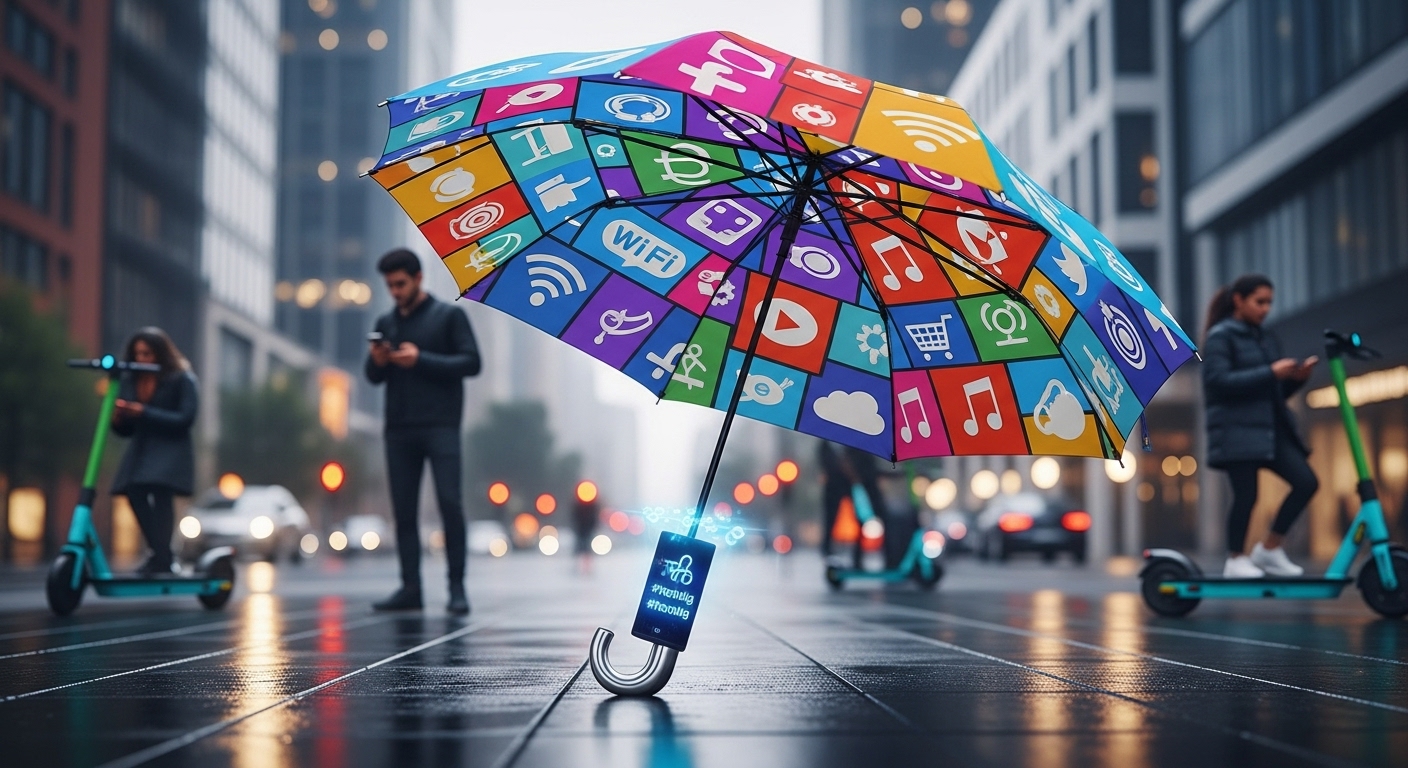
일상적인 보호의 도구인 우산은 현대 사회에 들어서면서 그 평범함을 벗어던지고 강력하고도 모순적인 상징물로 재탄생했습니다. 때로는 비폭력 저항의 방패로, 때로는 냉혹한 암살의 무기로, 그리고 때로는 인간의 복잡한 감정을 담아내는 예술적 모티프로 변모하며 우리 시대의 자화상을 그려내고 있습니다. 우산의 이러한 현대적 변용은, 가장 일상적인 사물이 어떻게 시대정신과 결합하여 비범한 의미를 획득하는지를 극적으로 보여줍니다.
방패로서의 우산: 정치적 저항의 상징
2014년 홍콩에서 벌어진 민주화 요구 시위는 '우산 혁명' 또는 '우산 운동'이라는 이름으로 전 세계에 알려졌습니다. 시위 참가자들이 경찰이 발사하는 최루액과 최루탄을 막기 위해 일제히 우산을 펼쳐 들면서, 우산은 비폭력 저항의 가장 강력한 상징이 되었습니다.51 거대한 국가 권력의 폭력에 맞서 시민들이 들어 올린 각양각색의 우산은, 자신들의 신념과 자유를 지키려는 연약하지만 굳건한 의지를 시각적으로 구현했습니다.53 평범한 일상의 도구가 가장 정치적인 저항의 아이콘으로 변모한 이 사건은, 우산의 현대사에서 가장 극적인 장면으로 기록되었습니다.
칼로서의 우산: 냉전 시대의 암살 무기
보호와 안식의 상징인 우산이 가장 섬뜩한 무기로 변모한 사건도 있습니다. 1978년 영국 런던에서 발생한 불가리아 출신 반체제 작가 게오르기 마르코프(Georgi Markov) 암살 사건입니다. KGB의 사주를 받은 것으로 추정되는 암살범은 특수하게 개조된 우산 끝을 이용해 마르코프의 허벅지에 치명적인 독극물 '리신(ricin)'이 담긴 아주 작은 금속 탄환을 주입했습니다.56 군중 속에서 누구도 의심하지 않을 평범한 우산이 소리 없는 살인 무기로 사용된 이 사건은 '불가리아 우산(Bulgarian umbrella)'이라는 용어를 낳으며 냉전 시대의 비정한 첩보전을 상징하게 되었습니다.
예술 속의 우산: 감정과 관계의 메타포
우산은 영화와 예술 작품 속에서 인물의 감정 상태나 관계의 변화를 암시하는 섬세한 장치로 자주 활용됩니다.
낭만과 친밀감: 비 오는 날 한 우산 아래 두 남녀가 함께 걷는 장면은 사랑의 시작을 알리는 세계 공통의 클리셰입니다. 우산은 외부 세계의 혼란으로부터 두 사람만의 사적이고 친밀한 공간을 만들어주는 역할을 합니다.49
환희와 자유: 영화 <사랑은 비를 타고(Singin' in the Rain)>에서 진 켈리가 보여준 상징적인 춤 장면은 우산의 상징성을 역전시킵니다. 그는 비를 막기 위해 우산을 쓰는 대신, 흠뻑 젖은 채 닫힌 우산을 지팡이 삼아 춤을 춥니다. 이는 사랑에 빠진 환희가 비를 맞는 것조차 즐거움으로 바꾸었음을, 즉 보호가 더 이상 필요 없음을 상징합니다.58
취약함과 고독: 반대로, 쏟아지는 비 속에서 홀로 우산을 쓰고 있는 인물은 고독과 슬픔을 상징할 수 있습니다. 영화 <사랑도 통역이 되나요?(Lost in Translation)>에서 주인공이 든 투명 비닐우산은 낯선 도시에서 느끼는 그녀의 정서적 투명성과 문화적 이질감을 시각적으로 드러내는 장치로 기능합니다.58
이처럼 현대 사회에서 우산이 지니는 강력한 상징성은 그것이 지극히 평범하고 보편적인 사물이라는 사실에서 비롯됩니다. 홍콩 시위대가 무기 대신 우산을 들었을 때, 암살자가 총 대신 우산을 사용했을 때, 그 충격과 상징성이 극대화되는 이유는 바로 보호라는 우산의 본질적 기능을 전복했기 때문입니다. 이처럼 평범함을 비범함으로 전환시키는 힘이야말로 우산을 현대의 가장 매력적인 상징물로 만든 원동력입니다.
제7장: 펼쳐질 미래 - 스마트 우산의 시대
우산의 4,000년 진화사는 이제 사물인터넷(IoT), 인공지능(AI) 기술과 만나 새로운 장을 열고 있습니다. 과거의 우산이 수동적인 물리적 보호막에 머물렀다면, 미래의 '스마트 우산'은 사용자와 능동적으로 상호작용하고 데이터를 기반으로 움직이는 지능적인 동반자로 거듭나고 있습니다. 이는 우산의 역사에서 세 번째 패러다임 전환이라 할 수 있으며, 우리 일상의 모든 사물이 지능화되는 더 큰 기술적 흐름을 반영합니다.
현재의 스마트 기능들
오늘날 시판되는 스마트 우산은 주로 일상생활의 불편함을 해결하는 데 초점을 맞추고 있습니다.
블루투스 및 GPS를 이용한 분실 방지: 스마트폰 앱과 연동하여 우산과 일정 거리 이상 멀어지면 경고 알림을 보내고, 마지막으로 연결이 끊긴 위치를 지도에 표시하여 분실을 막아줍니다.60 이는 우산을 자주 잃어버리는 사용자들에게 매우 실용적인 기능입니다.
자동화된 날씨 예보: 우산 손잡이에 내장된 LED 표시등이나 연동된 앱을 통해 실시간 날씨 정보를 제공하여 외출 시 우산을 챙겨야 할지 알려줍니다.62
향상된 소재와 설계: 탄소 섬유와 같은 가볍고 튼튼한 신소재를 사용하여 내구성을 높이고, 공기역학적 설계를 통해 강한 바람에도 뒤집히지 않도록 제작됩니다.60
미래의 가능성과 혁신

스마트 우산 시장은 연평균 6-8% 이상의 꾸준한 성장이 예상되며 60, 더욱 진보된 기술들이 접목될 전망입니다.
AI 기반의 예측 기능: 단순한 날씨 정보를 넘어, AI가 사용자의 위치와 이동 패턴을 분석하여 비가 올 확률을 예측하고 선제적으로 알림을 보내는 서비스가 가능해질 것입니다.60
지속가능성과 에너지 생성: 우산의 넓은 덮개 부분에 얇은 태양광 패널을 부착하여, 맑은 날에는 햇빛을 에너지로 전환하고 이를 이용해 스마트폰 등 작은 전자기기를 충전하는 기능이 현실화될 수 있습니다.60 또한 재활용 가능한 친환경 소재의 사용도 중요한 트렌드가 될 것입니다.61
스마트 시티와의 연동: 미래의 스마트 시티에서는 개인 소유의 우산을 넘어, 공공 인프라로서의 우산 시스템이 등장할 수 있습니다. 예를 들어, 버스 정류장이나 광장 같은 공공장소에 설치된 대형 캐노피가 강우 센서에 따라 자동으로 펼쳐지거나, 필요한 사람에게 우산을 대여해주는 공유 우산 서비스가 더욱 고도화될 것입니다.64
이러한 변화는 우산의 개념을 근본적으로 바꾸고 있습니다. 고대의 정적인 권력 상징에서, 근대의 수동적인 개인 도구로, 그리고 이제는 사용자의 환경 데이터와 상호작용하는 능동적인 '동반자'로 진화하고 있는 것입니다. 스마트 우산의 등장은 우리를 둘러싼 모든 사물이 네트워크에 연결되고 지능을 갖게 되는 미래 사회의 단면을 보여줍니다.
결론: 하나의 닫집 아래 담긴 인류의 이야기
파라오의 신성한 권위를 드러내던 거대한 닫집에서 시작하여, 오늘날 우리의 손에 들린 가벼운 접이식 우산을 거쳐, 미래의 데이터 기반 스마트 기기에 이르기까지, 우산이 걸어온 4,000년의 여정은 실로 경이롭습니다. 이 작은 '휴대용 지붕'은 단순한 비 가리개를 넘어, 각 시대와 문화의 필요와 욕망, 그리고 기술적 성취를 담아내는 거울이었습니다.
고대 문명에서 우산은 권력의 구조를 시각화했고, 중국에서는 실용적 지혜와 민속적 염원을 담아냈으며, 근대 유럽에서는 성별과 계급에 대한 사회적 갈등의 대리인이 되었습니다. 한국과 일본에서는 동일한 유산이 각기 다른 미학과 운명을 지닌 공예품으로 재탄생했으며, 현대에 이르러서는 정치적 저항의 방패이자 예술적 영감의 원천으로 끊임없이 새로운 의미를 부여받고 있습니다.
이제 우산은 인공지능과 사물인터넷 기술을 만나 또 한 번의 변신을 앞두고 있습니다. 이는 우산의 역사가 과거에 머물러 있지 않고, 인류 문명의 발전과 함께 계속해서 진화하고 있음을 증명합니다. 결국 우산의 이야기는, 변화하는 환경에 적응하고 더 나은 삶을 추구해 온 인류의 창의성과 투쟁, 그리고 지혜에 관한 이야기입니다. 우리가 무심코 펼쳐 드는 이 작은 닫집 아래, 인류가 수천 년에 걸쳐 쌓아 올린 문화와 갈등, 그리고 독창성의 광대한 역사가 함께 펼쳐지고 있는 것입니다.
A Small Roof Under the Sky, The Umbrella: From Symbol of Power to Everyday Companion, A 4,000-Year Cultural History
Introduction: More Than Shelter from the Rain
On a rainy day, we casually open an umbrella. Few realize that this simple act contains 4,000 years of human civilization. To us today, an umbrella is merely a daily tool to shield us from the rain, but tracing its origins reveals it was once a ritual item symbolizing sacred kingship, at times a controversial object at the center of social debate, and in the modern era, has evolved into a symbol of political resistance and an accessory packed with cutting-edge technology.1
How did this "portable roof" transform from a divine object revealing the authority of a sacred king to a disposable commodity, a symbol of peaceful protest, and a data-exchanging smart device? To answer this question, we will use the small object of the umbrella as a lens to explore the grand flow of human history. The story of the umbrella is, in essence, a microcosm of human history itself. Major societal shifts—the concentration of power in ancient empires, the rise of practical innovation in the East, the clash of class and gender in industrializing Europe, and the fusion of technology and daily life in modern society—are all reflected in the history of this small object. Let us now follow the 4,000-year journey of the smallest roof under the sky: the umbrella.
Chapter 1: The Shadow of the Gods - Ancient Origins of the Parasol
The history of the umbrella began not in the rain, but under the sun. The first umbrella was not a "rain umbrella" (雨傘) to block the rain, but a "parasol" (陽傘) to shield from the intense sunlight. Its journey started in the arid, hot lands of ancient Mesopotamia and Egypt, where the parasol established itself not just as a simple shading tool, but as one of the most potent symbols of power, divinity, and social order.
The First Umbrellas: A Symbol of Power in Mesopotamia
The oldest evidence of an umbrella-like object is found in the Akkadian Empire of Mesopotamia, around the 24th century BCE. The victory stele of the great Akkadian ruler Sargon the Great (reigned c. 2334–2279 BCE) clearly depicts an attendant holding a large parasol over the king's head as he heads to the battlefield.3 This clearly shows that the initial function of the parasol was as a visual marker of the king's dignity and authority, even on the battlefield.5
Egypt's Divine Canopy
About 4,000 years ago in ancient Egypt, the symbolism of the parasol evolved to a more sacred dimension.6 Only pharaohs, royalty, high nobility, and priests could use the parasol 8, and this was not just a privilege but a sign of connection to the divine. The Egyptians regarded the parasol as a symbol of the sky goddess 'Nut,' and to be under it meant to be under her divine protection.9 Therefore, the parasol in a pharaoh's procession was a device to publicly declare that he was a sacred being, entrusted with the right to rule from the heavens. The parasols of that time were often made of palm leaves or colorful feathers tied to a long handle, emphasizing their ritualistic nature over practicality.6
In the arid climates of ancient civilizations, 'shade' was a very scarce and valuable resource. The parasol was not merely an accessory but a form of 'portable architecture' that created a 'sacred space' around the ruler. It physically and symbolically separated the sacred body of the pharaoh from the harsh external environment and the common populace, thereby visually reinforcing the social order.
Greece and Rome: A Shift in Perception
While parasols were also used in ancient Greece and Rome, their meaning changed somewhat. They gradually came to be considered an accessory for women, and at times, a man using a parasol was seen as a sign of effeminacy.5 This perception foreshadowed the social resistance the umbrella would face when it was first introduced in Europe centuries later.10
Chapter 2: The Eastern Revolution - How China Invented the Rain Umbrella
The parasol, a static and ceremonial symbol in the ancient world, underwent a revolutionary transformation in China. It was reborn as a practical tool to block not only the sun but also the rain—a true 'umbrella'. The invention of a foldable structure and waterproofing technology was the most significant paradigm shift in the umbrella's history, transforming it from a symbol of power to a daily necessity for the masses, and further, into a canvas for rich cultural meaning.
A Legendary Invention
Chinese culture attributes the invention of the umbrella to several legendary figures, highlighting its importance. The most well-known story is about the wife of Lu Ban, a legendary craftsman of ancient China.13 Feeling sorry for her husband who got wet while working outdoors, she created a 'portable pavilion' using bamboo and animal hide or silk.15 Another legend traces its origin to the Yellow Emperor, who created a canopy called 'Huà Gài' (華蓋), inspired by the shape of a fully bloomed flower.16 These myths show how the umbrella was culturally perceived not just as an invention, but as a product of consideration and wisdom.
Technological Breakthroughs: Foldable Structure and Waterproofing
China's greatest contributions were two key technologies that imparted 'practicality'. The first was the development of a foldable structure. Descriptions of a foldable parasol appear in records as early as 21 AD, indicating that portability was achieved at an early stage.3 The second was waterproofing technology. Artisans applied tung oil or wax multiple times to tough paper made from mulberry bark and dried it, creating a lightweight yet effective waterproof shield.19 The 'oil-paper umbrella' (油紙傘) thus created became the prototype for East Asian umbrella culture.
From Symbol of Power to Folk Culture
In early China, the umbrella was also an important ceremonial item symbolizing the emperor's authority. The emperor used yellow or red umbrellas to signify his status, and the color and size of umbrellas were strictly regulated according to rank.15 However, the outstanding practicality of the oil-paper umbrella gradually led to its widespread use among the public. In this process, the umbrella absorbed a variety of folk symbols.
· Symbol of Marriage and Fertility: In traditional weddings, the red oil-paper umbrella plays a crucial role in protecting the bride from evil spirits.22 Notably, the Chinese pronunciation of 'oil-paper' (油紙, yóuzhǐ) is similar to 'to have a son' (有子, yǒuzǐ), making it a powerful symbol of fertility.13 Additionally, the round shape of the umbrella signifies a complete and happy marriage.13
· Longevity and Good Fortune: Purple umbrellas symbolized long life for the elderly, while white ones were for funerals, with different colors carrying different meanings.13 The traditional Chinese character for umbrella, '傘', contains the character for 'person' (人) multiple times, which was interpreted as a wish for numerous descendants.13
Thus, the innovations of a foldable structure and waterproofing in China changed the essence of the umbrella. It transitioned from a passive, ceremonial object that had to be 'held for' someone to an active, personal technology that an individual could 'carry and use' themselves. This change brought the umbrella out from behind palace walls, transforming a rare symbol of power into a universal daily tool imbued with rich cultural meaning. This innovative invention was transmitted to neighboring countries like Korea and Japan during the Tang Dynasty (618-907), laying the foundation for East Asian umbrella culture.21
Chapter 3: The Gentleman's Burden - The Umbrella's Controversial Arrival in Europe
The practical, everyday umbrella that had become established in the East faced a harsh ordeal in the West, particularly in 18th-century England, where it became a center of controversy. This unfamiliar object from China was not just a rain shield; it became a catalyst that ignited deep-seated anxieties in British society about gender roles, class structure, and national identity. The story of the brave pioneer Jonas Hanway, who popularized the umbrella despite public ridicule, was like a prelude to modernity, a clash between old customs and new rationalism.
Pre-Umbrella Europe
Before the 18th century, it was natural for people on the streets of Europe to get wet in the rain. The only options were to dash for cover under an eave or wear a heavy cloak with a hood.3 Some even considered the act of artificially blocking the rain from the sky to be an irreverent act against God's will.26 The concept of a personal rain shield simply did not exist.
The Pioneer, Jonas Hanway
The person who brought change to this social climate was the English traveler and philanthropist Jonas Hanway (1712-1786). Around 1750, deeply impressed by the practicality of umbrellas he had seen on his travels in Asia, he returned to London and began to use one on its rainy streets.5 He is recorded as the first man in London to use an umbrella as a matter of course, and for the next 30 years, he endured relentless public ridicule and contempt.30
The Causes of Fierce Social Resistance
The resistance Hanway faced was more than just curiosity about a strange object. It was intertwined with the complex psychology of British society at the time.
· Fixed Gender Roles: In Europe at that time, the parasol was already recognized as a female accessory. Therefore, for a man to carry an umbrella was to be labeled "effeminate" or a "mincing Frenchman".29
· Class and Economic Conflict: The wealthy traveled by carriage and had no need to walk in the rain. Walking in the rain was a symbol of the lower classes. In this context, carrying an umbrella was seen as an act of affectation, pretending to be refined while being of a walking station. In particular, the spread of umbrellas posed a direct threat to the business of carriage drivers, who fiercely resisted by intentionally splashing Hanway with mud or hurling insults at him.34
· Poor Quality: Early European umbrellas were made with whalebone or heavy wood ribs and covered with oily canvas, making them very heavy and cumbersome, and their waterproofing was not perfect.26
The Turning Point and Popularization
Despite the persistent ridicule, the practicality of the umbrella in London's frequent rain gradually gained recognition. By the time Hanway passed away, the sight of men carrying umbrellas was no longer a strange one. The umbrella became so symbolic of Hanway that it was sometimes called a "Hanway".28 Critically, in 1852, Samuel Fox invented a light and strong steel rib, which made mass production of umbrellas possible. As prices fell, it became an essential item for all classes.28
The 'umbrella debate' in 18th-century England was not just a trivial affair. It was a clash between the rational, individualistic modern way of thinking—"it's raining, so I'll block it"—and the traditional, collective custom—"men should endure the rain." The eventual victory of the umbrella was a victory for pragmatism and symbolized the identity of the newly emerging urban middle class. The umbrella, once considered a symbol of effeminacy, was now reborn as a symbol of the 'respectable gentleman' striding through the rainy city.
Chapter 4: An Aesthetic Unfurled - The Art of the Umbrella in Korea and Japan
The practical paper umbrella, invented in China, was transmitted to Korea and Japan, where it blossomed into unique aesthetics on different cultural soils. In Korea, it developed into the humble and sturdy craft item 'jiusan' (紙雨傘), which faced a crisis of near-extinction in the wave of modernization. In Japan, it differentiated into the delicate and symbolic art form 'wagasa' (和傘), which continues to be an important part of traditional culture today. The different paths the paper umbrella took in these two countries offer a fascinating case study of how the same cultural heritage can interact differently with the modernization process of each society.
Part I: Korea's Enduring Craft, Jiusan (紙雨傘)
· From the King's Ilsan to the Commoner's Jiusan: The history of the umbrella in Korea, like in other ancient civilizations, began as a symbol of power. Goguryeo tomb murals depict a large 'ilsan' (日傘), a parasol held by an attendant to shield a noble from the sun, representing royal authority.36 Later, the practical oil-paper umbrella was introduced from China and entered the lives of common people under the name 'jiusan' (紙雨傘).26 The native Korean word for umbrella, 'syurup', appears in 15th-century documents like the Hunminjeongeum Haerye, indicating its long history.4
· Natural Materials and a Craftsman's Touch: The Korean jiusan is characterized by its simple materials sourced from nature. The frame is made of bamboo, and the canopy uses high-quality Korean paper, hanji, made from mulberry fibers. For waterproofing, it is coated several times with perilla oil and dried.11 The entire process is an intricate handicraft performed by a master craftsman.
· A History of Decline and Revival: The jiusan was a common household item in Korea until the mid-20th century.41 However, with the mass production of cheap vinyl and nylon umbrellas after the 1960s, the handcrafted jiusan rapidly lost its place.26 By the 1980s, its production had almost ceased, and the tradition was on the verge of being lost. Today, the art of making jiusan is being painstakingly revived and passed down by a few artisans, most notably by National Intangible Cultural Heritage holder 'Usanjang' Yoon Gyu-sang.41
Part II: Japan's Elegant Forms, Wagasa (和傘)
· A Diverse World of Umbrellas: The umbrella introduced to Japan evolved into a sophisticated art form under the name 'wagasa' (和傘), finely differentiated by use and form, creating a unique culture.44
o Bangasa (番傘): A sturdy and simple umbrella made with thick bamboo. It was mainly used by men or, as its name "number umbrella" suggests, by shops that lent them to customers, often with the shop's number inscribed on them.
o Janome-gasa (蛇の目傘): Meaning "snake's eye," this umbrella is characterized by a concentric circle pattern that appears when opened. It is light, delicate, and ornate, mainly used by women and as a prop in traditional arts like Kabuki. The snake-eye pattern is believed to ward off evil spirits.46
o Higasa (日傘): A parasol made without waterproofing, used only for sun protection.
· A Symbol of Romance and Intimacy, Aiaigasa (相合傘): A unique custom in Japanese culture is 'aiaigasa'. This act of two people sharing one umbrella on a rainy day is a symbol of romance and intimacy, going beyond simple consideration.49 In the Edo period, when relationships between men and women were not free, sharing an umbrella was one of the few opportunities for lovers to be physically close. Due to this cultural background, aiaigasa is still frequently used in Japanese films, manga, and dramas as a cliché to signify the beginning of love.
Both Korea and Japan received the paper umbrella from China, but its fate took different paths. Japan's wagasa survived by enhancing its artistry and symbolism within specific cultural niches like Kabuki, the tea ceremony, and geisha culture. In contrast, Korea's jiusan, which existed primarily as a practical craft item, was nearly wiped out by the tide of rapid industrialization. The divergent histories of the paper umbrella in these two countries provide deep insight into how traditional crafts survive, or fail to survive, in the face of the great changes brought by industrialization.
Chapter 5: A Global Tapestry - A Comparative Cultural Analysis
As we have seen, the single object of the umbrella has developed in vastly different ways and been imbued with symbolic meaning according to the climate, social structure, and values of different cultures. From the sacred parasol of ancient Egypt to the practical oil-paper umbrella of China, and the black umbrella that became a symbol of the English gentleman, the journey of the umbrella is a fascinating case study that encapsulates the diversity of human culture. The comparative analysis table below summarizes these cultural transformations, allowing for a clear, at-a-glance understanding of its key features.
This table clearly shows that the umbrella is a cultural 'chameleon,' reflecting the identity of each society rather than being a mere functional tool. For example, following the 'Primary Purpose' row, one can see the gradual shift from 'Sun/Ceremonial' in Egypt to 'Sun/Rain/Ritual' in China, and then to primarily 'Rain' in Britain. The 'Social Association' row reveals an interesting trajectory from 'Exclusively Royalty' to 'Stratified Use' by class, and in Europe, to an object of social debate surrounding 'femininity' and 'masculinity'. In this way, the umbrella is like a small mirror reflecting how each culture perceives and constructs its world.
| Feature | Ancient Mesopotamia/Egypt | Ancient/Imperial China | Joseon Korea | Edo Japan | 18th Century Britain |
| Primary Purpose | Sun protection; Ceremonial | Sun & Rain; Ritual; Status | Sun & Rain; Status (early); Daily use (later) | Sun & Rain; Art/Performance; Ritual | Rain protection |
| Key Materials | Palm leaves, feathers, wood | Bamboo, silk, paper, tung oil | Bamboo, hanji paper, perilla oil | Bamboo, washi paper, vegetable oils | Whalebone, wood, oiled silk/canvas |
| Social Association | Exclusively royalty and divinity | Stratified: Emperor, officials, and commoners (with restrictions) | Royalty (ilsan); later, all classes (jiusan) | Stratified by type (bangasa for commoners, janome for women/artists) | Initially a female accessory; seen as effeminate for men |
| Core Symbolic Meaning | Divine power, heavenly authority, sacred space | Power, fertility, longevity, good fortune, reunion | Authority (early); practical craft (later) | Warding off evil, aesthetic beauty, romance (aiaigasa) | Controversy, social status, and later, respectable masculinity |
| Key Terminology | Parasol | 油纸伞 (yóuzhǐsǎn), 華蓋 (huà gài) | 일산 (ilsan), 지우산 (jiusan), 슈룹 (syurup) | 和傘 (wagasa), 番傘 (bangasa), 蛇の目傘 (janome-gasa) | Umbrella, Parasol, "Hanway" |
Chapter 6: The Modern Canopy - Umbrellas in Politics, Espionage, and Art
In modern society, the umbrella, a tool of everyday protection, has shed its ordinariness to be reborn as a powerful and contradictory symbol. It has transformed into a shield of non-violent resistance, a weapon of cold-blooded assassination, and an artistic motif capturing complex human emotions, thereby painting a portrait of our times. These modern transformations of the umbrella dramatically show how the most mundane of objects can combine with the spirit of the age to acquire extraordinary meaning.
The Umbrella as a Shield: A Symbol of Political Resistance
The 2014 pro-democracy protests in Hong Kong became known worldwide as the "Umbrella Revolution" or "Umbrella Movement." As protesters uniformly opened their umbrellas to shield themselves from police pepper spray and tear gas, the umbrella became the most potent symbol of non-violent resistance.51 The colorful umbrellas raised by citizens against the violence of state power visually embodied their fragile yet firm will to protect their beliefs and freedoms.53 This event, where an ordinary daily object transformed into the most political icon of resistance, is recorded as the most dramatic scene in the modern history of the umbrella.
The Umbrella as a Sword: A Weapon of Cold War Espionage
There is also a case where the umbrella, a symbol of protection and comfort, transformed into the most chilling of weapons. This was the 1978 assassination of the Bulgarian dissident writer Georgi Markov in London. An assassin, believed to be acting on behalf of the KGB, used a specially modified umbrella tip to inject a tiny metal pellet containing the deadly poison 'ricin' into Markov's thigh.56 This incident, where an ordinary umbrella that would arouse no suspicion in a crowd was used as a silent murder weapon, gave rise to the term 'Bulgarian umbrella' and came to symbolize the ruthless espionage of the Cold War era.
The Umbrella in Art: A Metaphor for Emotion and Relationships
In films and works of art, the umbrella is often used as a delicate device to allude to a character's emotional state or a change in relationships.
· Romance and Intimacy: The scene of a man and a woman walking together under one umbrella on a rainy day is a universal cliché for the beginning of love. The umbrella serves to create a private, intimate space for two people, separate from the chaos of the outside world.49
· Joy and Freedom: The iconic dance scene by Gene Kelly in the film Singin' in the Rain reverses the symbolism of the umbrella. Instead of using it to shield himself from the rain, he dances joyfully, sopping wet, with the closed umbrella as a prop. This symbolizes that the ecstasy of being in love has turned even the act of getting wet into a pleasure, making protection no longer necessary.58
· Vulnerability and Loneliness: Conversely, a lone figure under an umbrella in the pouring rain can symbolize loneliness and sorrow. The transparent vinyl umbrella held by the protagonist in the film Lost in Translation visually expresses her emotional transparency and cultural alienation in a foreign city.58
The powerful symbolism of the umbrella in modern society stems from the very fact that it is a mundane and universal object. The shock and symbolic power of its use by Hong Kong protesters or by an assassin is maximized precisely because it subverts the umbrella's essential function of protection. This power to transform the ordinary into the extraordinary is the driving force that has made the umbrella one of the most compelling symbols of the modern age.
Chapter 7: The Future Unfurled - The Dawn of the Smart Umbrella
The 4,000-year evolution of the umbrella is now opening a new chapter by meeting the Internet of Things (IoT) and Artificial Intelligence (AI) technologies. If the umbrellas of the past remained passive physical shields, the 'smart umbrella' of the future is being reborn as an intelligent companion that actively interacts with the user and operates based on data. This can be called the third paradigm shift in the history of the umbrella, reflecting a larger technological trend where all objects in our daily lives are becoming intelligent.
Current Smart Features
The smart umbrellas available on the market today mainly focus on solving everyday inconveniences.
· Loss Prevention using Bluetooth and GPS: By linking to a smartphone app, it sends a warning alert if you move a certain distance away from the umbrella and displays the last connected location on a map to prevent loss.60 This is a very practical feature for users who frequently lose their umbrellas.
· Automated Weather Forecasts: It provides real-time weather information through an LED indicator on the umbrella handle or a linked app, letting you know if you need to take the umbrella with you when you go out.62
· Enhanced Materials and Design: It uses new lightweight and strong materials like carbon fiber to increase durability and is made with an aerodynamic design to prevent it from flipping inside out in strong winds.60
Future Possibilities and Innovations
The smart umbrella market is expected to grow steadily at an average annual rate of 6-8% or more 60, and more advanced technologies are expected to be incorporated.
· AI-based Predictive Functions: Going beyond simple weather information, AI will analyze the user's location and movement patterns to predict the probability of rain and provide proactive alerts.60
· Sustainability and Energy Generation: Thin solar panels attached to the large canopy of the umbrella could convert sunlight into energy on sunny days, which could then be used to charge small electronic devices like smartphones.60 The use of recyclable and eco-friendly materials will also be an important trend.61
· Integration with Smart Cities: In the smart cities of the future, an umbrella system as public infrastructure, rather than individually owned umbrellas, could emerge. For example, large canopies installed in public spaces like bus stops or squares could automatically open in response to rain sensors, or a shared umbrella service that lends umbrellas to those in need could become more advanced.64
These changes are fundamentally altering the concept of the umbrella. It is evolving from a static symbol of power in ancient times, to a passive personal tool in the modern era, and now to an active 'companion' that interacts with the user's environmental data. The emergence of the smart umbrella shows a glimpse of a future society where all objects around us are connected to a network and possess intelligence.
Conclusion: Reflections Under a Shared Canopy
From the massive canopies that revealed the sacred authority of the pharaohs, through the lightweight folding umbrellas in our hands today, to the data-driven smart devices of the future, the 4,000-year journey of the umbrella is truly remarkable. This small 'portable roof' has been more than just a rain shield; it has been a mirror reflecting the needs, desires, and technological achievements of each era and culture.
In ancient civilizations, the umbrella visualized the structure of power; in China, it embodied practical wisdom and folk wishes; in modern Europe, it became a proxy for social conflicts over gender and class. In Korea and Japan, the same heritage was reborn as craft items with different aesthetics and destinies. And in the modern era, it continues to be imbued with new meanings as a shield of political resistance and a source of artistic inspiration.
Now, the umbrella is on the verge of another transformation, meeting artificial intelligence and the Internet of Things. This proves that the history of the umbrella is not confined to the past but continues to evolve with the development of human civilization. In the end, the story of the umbrella is a story about the creativity, struggle, and wisdom of humanity, which has adapted to a changing environment and pursued a better life. Under this small canopy that we casually open, the vast history of culture, conflict, and ingenuity that humanity has built over thousands of years unfolds.
참고 자료
1. The Fascinating Journey of the Umbrella: A Historical Glimpse, https://promotionalumbrellas.co.uk/blogs/news/the-fascinating-journey-of-the-umbrella-a-historical-glimpse
2. [배은경의 유물이야기(47)]아무나 쓸 수 없었던 우산이야기 - 경상일보, https://www.ksilbo.co.kr/news/articleView.html?idxno=544124
3. 우산 - 나무위키, https://namu.wiki/w/%EC%9A%B0%EC%82%B0
4. 우산 (r752 판) - 나무위키, https://namu.wiki/w/%EC%9A%B0%EC%82%B0?uuid=0467a585-2812-46ed-aacd-78e535367006
5. 18세기 유럽, 우산 첫 등장에 “쯧, 비를 막다니 이상한 일이군” - 조선일보, https://www.chosun.com/kid/kid_economy/kid_honeybee/2022/07/07/Y525LJGRQYD4FQDXWP4VRN36JA/
6. 누가 접이식 우산을 발명? - 지식 - 취안저우 하레톤 수출입 유한 공사, https://ko.hareton-umbrella.com/info/who-invented-the-folding-umbrella-48409013.html
7. [사소한 역사] 고대 이집트·중국서 해 가리개로 시작… 유럽선 18세기 중반까지 여성만 썻대요http://newsteacher.chosun.com/site/data/html_dir/2021/07/05/2021070502231.html
8. 남성들 당당하게 우산쓰게 된 건 이분 덕분 - 한겨레https://www.hani.co.kr/arti/economy/economy_general/589452.html
9. [말글밭]양산·우산 - 부산일보, https://mobile.busan.com/view/busan/view.php?code=19900619000092
10. 우산과 종이컵 - 굿뉴스데일리, https://www.gndaily.kr/news/articleView.html?idxno=22725
11. Umbrella - Wikipedia,
https://en.wikipedia.org/wiki/Umbrella
12. museumcollections.hullcc.gov.uk, http://museumcollections.hullcc.gov.uk/collections/storydetail.php?irn=218&master=455#:~:text=Umbrellas%20are%20mainly%20used%20as,as%20well%20as%20in%20China.
13. Oil-paper umbrella - Wikipedia,
https://en.wikipedia.org/wiki/Oil-paper_umbrella
14. What Are Oil Paper Umbrellas?-You Zhi San - Chinese showcase, https://www.chinese-showcase.com/blogs/chinese-culture/what-are-oil-paper-umbrellas-you-zhi-san
15. 고대부터 현재까지 중국 문화 접근: 문화적 우산, https://insights.made-in-china.com/kr/Approach-to-China-Culture-from-Ancient-to-Current-Days-Cultural-Umbrella_WfaAwyVTOnID.html
16. 청재 민승준 - ARTKOREA 아트코리아, https://www.artko.kr/~minseungjun/board?menu_id=2982&p=4&pm=view&article_id=25537
17. 우산은 누가 발명했나요? - Hfumbrella, https://www.hfumbrella.com/ko/%EC%9A%B0%EC%82%B0%EC%9D%84-%EB%B0%9C%EB%AA%85%ED%95%9C-%EC%82%AC%EB%9E%8C
18. 우산과 양산 - 위키백과, 우리 모두의 백과사전, https://ko.wikipedia.org/wiki/%EC%9A%B0%EC%82%B0%EA%B3%BC_%EC%96%91%EC%82%B0
19. [재미있는 발명이야기] 우산의 발명 - 넥스트미디어, https://www.nextmedia.co.kr/news/articleView.html?idxno=21931
20. A brief history of umbrellas, https://soakedumbrellas.com/blogs/blogs/a-brief-history-of-umbrellas
21. Things You May Not Know about Chinese Oli-paper Umbrellas - Beijing Tourism https://english.visitbeijing.com.cn/article/47ONsmKvSk2
22. 고대와 현대 중국에서 붉은 기름 종이 우산 디자인이 인기 있는 이유, https://insights.made-in-china.com/kr/The-Reason-Why-Red-Oil-Paper-Umbrella-Designs-Are-Popular-in-Ancient-and-Current-China_SAaGwOcMCQDh.html
23. The Elegance of the Chinese Bamboo Oil Paper Umbrella: A Cultural Icon - Hfbrolly, https://hfbrolly.com/the-elegance-of-the-chinese-bamboo-oil-paper-umbrella-a-cultural-icon
25. Oil-Paper Umbrella: Artwork and Accessory - 今日中国, http://www.chinatoday.com.cn/ctenglish/2018/ich/201805/t20180515_800129484.html
26. 우산쓰는 사람 = 차 못사는 사람?! / 우산의 역사 - Fig.1, https://www.fig1.kr/history/umbrella
27. 비오는 날 소중한 우산, 언제부터 썼을까?, https://ezpen.co.kr/contents_view.php?idx=3300
28. 우산은 언제 발명되었고, 그전에는 뭘 썼어? : r/AskHistorians - Reddit, https://www.reddit.com/r/AskHistorians/comments/1e27aj/when_was_the_umbrella_invented_and_what_was_used/?tl=ko
29. The history of the umbrella - www.european-umbrellas.com, https://www.european-umbrellas.com/blog/umbrella-history.html
30. Jonas Hanway, Pioneering Umbrella User - Communicating with Prisoners, 10월 14, 2025에 액세스, https://www.acrosswalls.org/notes/jonas-hanway-pioneering-umbrella-user/
31. Umbrella History and Evolution | Fulton Umbrellas – Blog, , https://www.fultonumbrellas.com/blog/2018/02/21/umbrella-history-and-evolution-fulton-umbrellas/
32. Umbrellas and Parasols | Encyclopedia.com, https://www.encyclopedia.com/fashion/encyclopedias-almanacs-transcripts-and-maps/umbrellas-and-parasols
33. Umbrellas: A Brief History of a British must-have - Cosi Tabellini UK, https://blog.italian-pewter.co.uk/umbrellas-a-brief-history-of-a-british-must-have/
34. Jonas Hanway - Wikipedia, https://en.wikipedia.org/wiki/Jonas_Hanway
35. Umbrellas and Their History: How They Made a Difference - geriwalton.com, https://www.geriwalton.com/umbrellas-and-their-history-in-united/
36. 일산(日傘) - 한국민족문화대백과사전 - 한국학중앙연구원https://encykorea.aks.ac.kr/Article/E0047222
37. 우산(雨傘) - 한국민족문화대백과사전 - 한국학중앙연구원, https://encykorea.aks.ac.kr/Article/E0039940
38. 지우산 스토리 - 비꽃, https://www.bikkot.kr/27
39. 우산(雨傘) 이야기 - 특급뉴스, 10월 14, 2025에 액세스, https://www.expressnews.co.kr/news/articleView.html?idxno=235393
40. 명장의 방 비가 오면 피어나는 종이꽃 글. 편집팀 윤규상 전북 무형문화재 제45호 우산장 - 박물관신문, https://webzine.museum.go.kr/sub.html?amIdx=15171
41. 무형문화재 - 윤규상 - 전주공예품전시관, http://www.jeonjucraft.or.kr/2019/inner.php?sMenu=B1100&mode=view&no=15
42. 종이 우산 (r47 판) - 나무위키:대문, https://namu.wiki/w/%EC%A2%85%EC%9D%B4%20%EC%9A%B0%EC%82%B0?uuid=8b54c18d-e0b3-4556-9fba-1fddc61b2259
43. 브랜드 스토리 - 비꽃, https://www.bikkot.kr/26
44. Thorough explanation of Wagasa's history, types, and production process - IKEHIKO Japan, https://www.ikehikojapan.com/blogs/traditional/l_20220629
45. What are Wagasa? 7 Things to Know About Japanese Umbrellas - Japan Objects, https://japanobjects.com/features/wagasa
47. Wagasa Maker in Kyoto Shares More Than 300 Years of Tradition | June 2023, https://www.gov-online.go.jp/eng/publicity/book/hlj/html/202306/202306_02_en.html
48. The difference between Japanese umbrellas and bangasa - Kyoto Wagasa parasol shop Tsujikura, https://www.kyoto-tsujikura.com/en/pages/tigai
49. How to Say “I Love You” in Japanese: An Umbrella! - Sakuraco, https://sakura.co/blog/how-to-say-i-love-you-in-japanese-an-umbrella
50. How to Say “I Love You” in Japanese: An Umbrella! - Sakuraco, https://sakura.co/blog/how-to-say-i-love-you-in-japanese-an-umbrella/
51. 홍콩인들이 우산을 쓴 까닭은? / KBS뉴스(News) - YouTube, https://www.youtube.com/watch?v=tbX2GOHk8ts
52. '우산혁명 계승' 홍콩 시위…우산으로 얼굴 가리고 최루탄 막았다 - 한겨레, https://www.hani.co.kr/arti/international/international_general/907822.html
53. 우산혁명 10주년…'중국화' 속 쇠락하는 홍콩 / KBS 2024.09.30. - YouTube, 10월 14, 2025에 액세스, https://www.youtube.com/watch?v=PT8xLWBW84g
54. [뉴스따라잡기] 우산혁명 - VOA 한국어, https://www.voakorea.com/a/3526972.html
55. 우산 운동 - 위키백과, 우리 모두의 백과사전, https://ko.wikipedia.org/wiki/%EC%9A%B0%EC%82%B0_%EC%9A%B4%EB%8F%99
56. 리친 - 위키백과, 우리 모두의 백과사전, https://ko.wikipedia.org/wiki/%EB%A6%AC%EC%B9%9C
57. 0.001g만으로도 사람 죽이는 독극물?…리신은 여기 왜 나와?? / 비디오머그 - YouTube, https://www.youtube.com/watch?v=3A4wxbPTYYQ
58. Object lesson: The umbrellas of cinema | Sight and Sound - BFI, https://www.bfi.org.uk/sight-and-sound/features/object-lesson-umbrellas-cinema
59. When an Umbrella is More Than Just an Umbrella - Literary Hub https://lithub.com/when-an-umbrella-is-more-than-just-an-umbrella/
60. Smart Umbrella Market Set to Grow to USD 1.2 Billion by 2033,, https://www.openpr.com/news/4197568/smart-umbrella-market-set-to-grow-to-usd-1-2-billion-by-2033
61. Trending Smart Umbrella 2025: Tech, Solar & UV Protection - Accio.aihttps://www.accio.com/business/trending-smart-umbrella-2025
62. Smart Umbrella Market | Size, Share, Growth | 2023 - 2030, https://virtuemarketresearch.com/report/smart-umbrella-market
63. Smart Umbrella Market Size, Growth and Analysis Report - 2033 - DataHorizzon Research,
https://datahorizzonresearch.com/smart-umbrella-market-19340
64. Smart Umbrella: A Way to Beautify Future Smart Cities, , https://hrmars.com/papers_submitted/6936/smart-umbrella-a-way-to-beautify-future-smart-cities.pdf


